
 Home
Home About us
 Products
 Contact
 News
News
If someone asks: “How many types of rice paper are there in Vietnam?”, it is probably very difficult to give an exact number. This is because rice paper is not just a simple food item. Stretching from North to South, each region has its own way of making it, utilizing unique ingredients and flavors. This creates dozens, if not hundreds, of different variations of Vietnamese rice paper (bánh tráng).
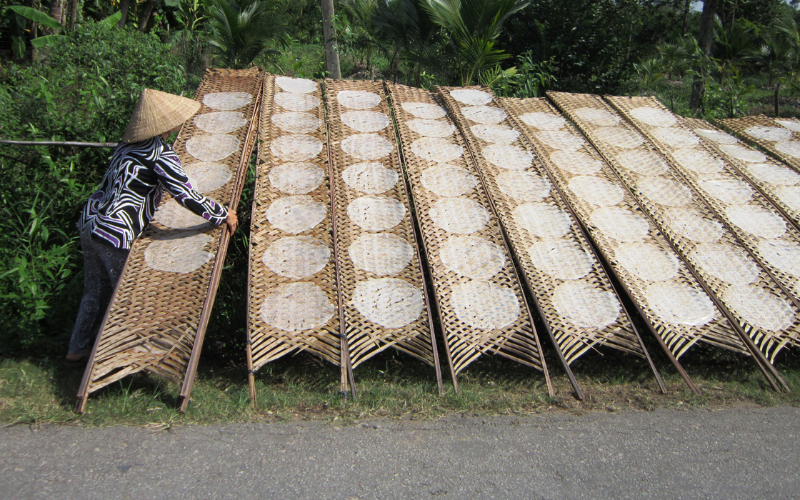
Interestingly, many foreigners only know about rice paper used for making fresh summer rolls (gỏi cuốn) or fried spring rolls (chả giò). In reality, the world of Vietnamese rice paper is vastly richer. Let’s join Hanita on a journey to explore these humble sheets of rice paper that have been deeply intertwined with generations of Vietnamese people.
From Rice Grains to Rice Paper
In the old days, in the rural areas of Central and Southern Vietnam, whenever Lunar New Year (Tết) or death anniversaries (đám giỗ) approached, families would gather around the rice paper steaming stoves. Rice was thoroughly soaked, ground into a liquid batter, and then spread thinly onto a layer of cloth stretched tightly over a pot of boiling water. Afterward, the sheets were laid out to dry under the sun, creating their characteristic chewiness and aroma. From that traditional process, many different types of rice paper were born, tailored to suit specific dishes and regional preferences.
1. Rice Paper for Fresh Summer Rolls (Bánh tráng cuốn gỏi cuốn) – The Most Popular Type
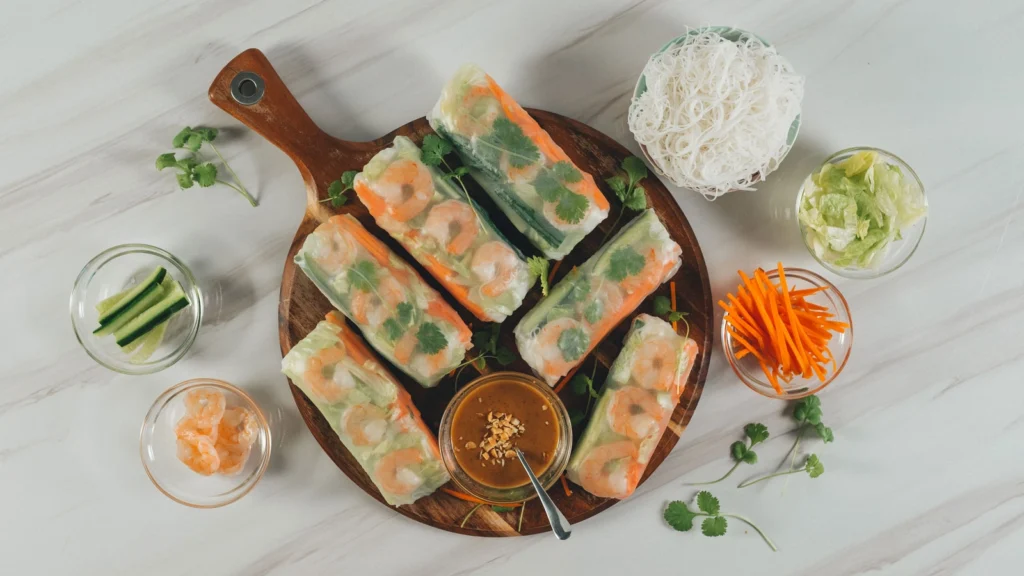
This is the most widely recognized type of rice paper on the international market.The paper usually has an off-white color, moderate thinness, and becomes soft and pliable after being lightly moistened. Vietnamese people use it to wrap shrimp, pork, and fresh herbs to create the famous gỏi cuốn (fresh summer rolls). Today, rice paper for fresh rolls is produced in various sizes. In addition to the traditional round shape, square and rectangular versions are also available to meet the demands of various export markets.
2. Spring Roll Rice Paper (Bánh tráng chả giò)
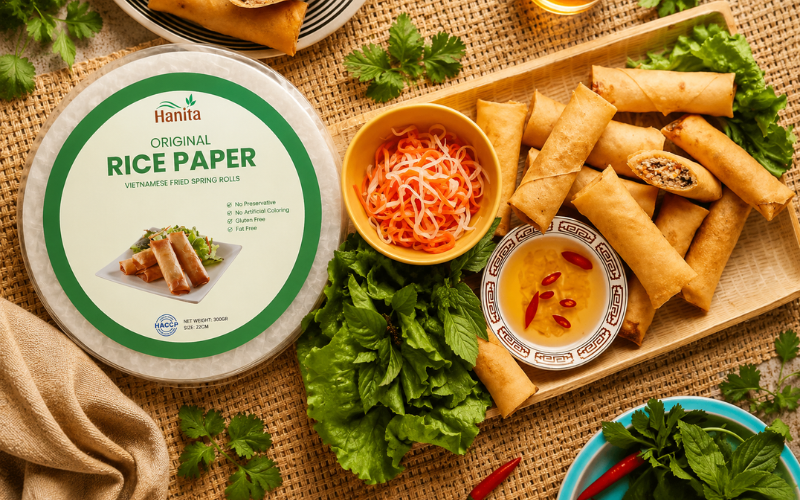
If you travel along Vietnam from North to South and ask to buy ingredients for making fried spring rolls, you might get different answers. In the South, people call it bánh tráng chả giò. However, in the North, this product is known as bánh đa nem. Despite the different names, both refer to the rice paper used to wrap a filling of minced meat, shrimp, crab, mushrooms, glass noodles, and vegetables before being deep-fried to a golden crisp.In Europe, this product is commonly called Spring Roll Rice Paper or Rice Paper for Fried Spring Rolls. Many Vietnamese, Chinese, and Asian restaurants in France, Germany, the Netherlands, and the US use this type of paper to prepare fried rolls.
Although there is a linguistic difference between bánh đa nem and bánh tráng chả giò, both reflect the beauty of Vietnamese culinary culture: from simple ingredients like rice and water, Vietnamese people have created the perfect thin wrapper to encapsulate the distinct flavors of each region.
3. Sesame Rice Paper (Bánh tráng mè)
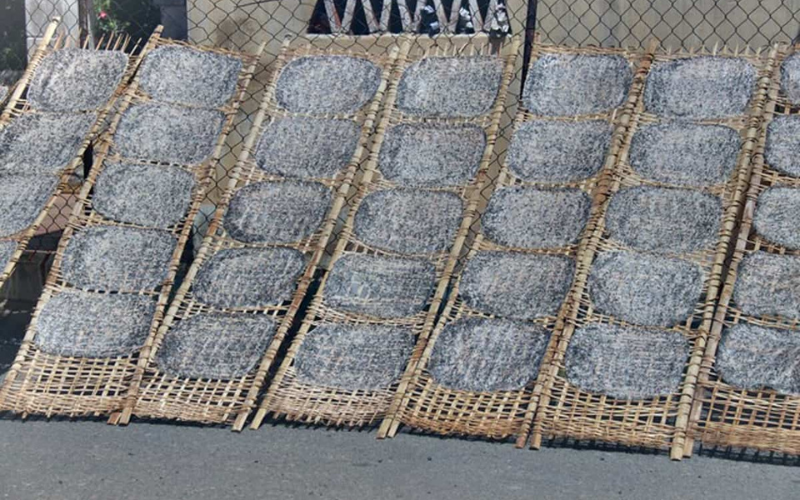
In the central provinces, particularly Bình Định and Quảng Ngãi, sesame rice paper is a familiar staple in many households. Black or white sesame seeds are sprinkled generously over the surface of the paper. Once grilled, it releases the distinct, rich aroma of toasted rice and sesame. This is a common sight in almost every daily meal of the locals, often served as an accompaniment to dishes like Mỳ Quảng (Quảng style noodles), Hến Xào (stir-fried baby clams), and more.
4. Grilled Rice Paper (Bánh tráng nướng)
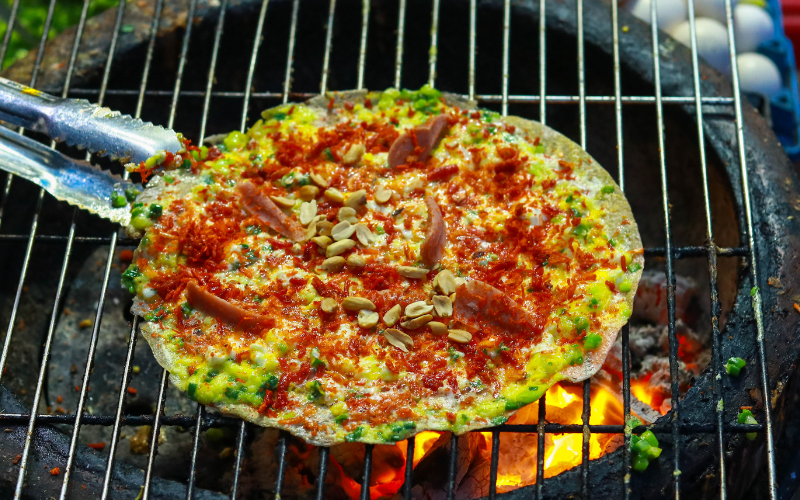
Mentioning bánh tráng nướng instantly brings the chilly city of Đà Lạt to mind. A thin sheet of rice paper is grilled over hot charcoal, then topped with eggs, green onions, sausages, minced meat, or cheese. This street food is affectionately dubbed “Vietnamese Pizza” by many international tourists due to its appealing look and unique flavor profile.
5. Coconut Rice Paper (Bánh tráng dừa)
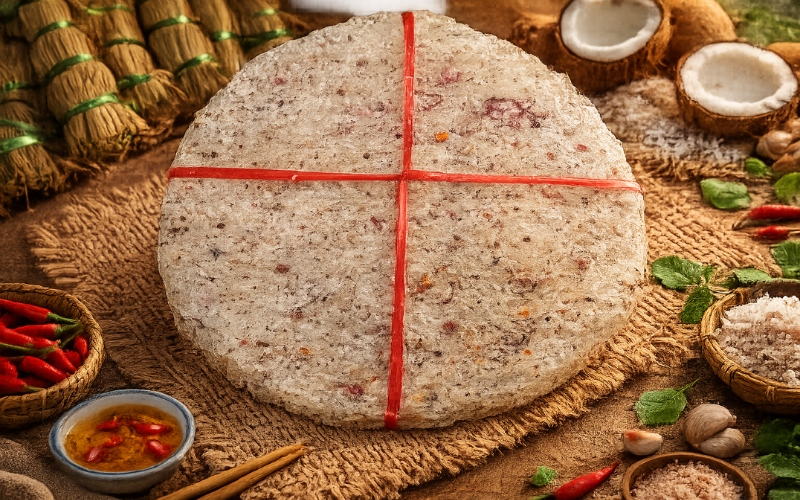
This is a famous specialty of Central Vietnam. In addition to rice, the ingredients include: Coconut milk, Sesame seeds, Sugar. Once grilled, the paper boasts a subtle richness and a signature coconut aroma, making it a highly popular snack.
6. Satay Rice Paper & Shredded Rice Paper Salad (Bánh tráng sa tế, bánh tráng trộn)
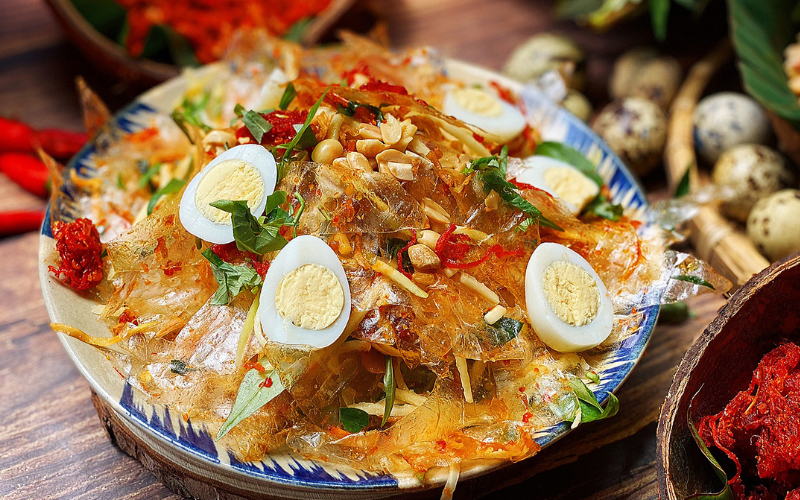
One of the most creative innovations in Vietnamese cuisine is rice paper salad. What was once a simple rice paper used for wrapping has been transformed into one of Vietnam’s most iconic street foods. Thin strips of rice paper are mixed with a variety of signature ingredients, creating a unique combination of sweet, sour, salty, and spicy flavors.
Today, rice paper salad is not only a favorite snack among Vietnamese people but also a must-try street food that attracts curious travelers from around the world.
7. Dew-Fleshed Rice Paper (Bánh tráng phơi sương) – The Pride of Tây Ninh
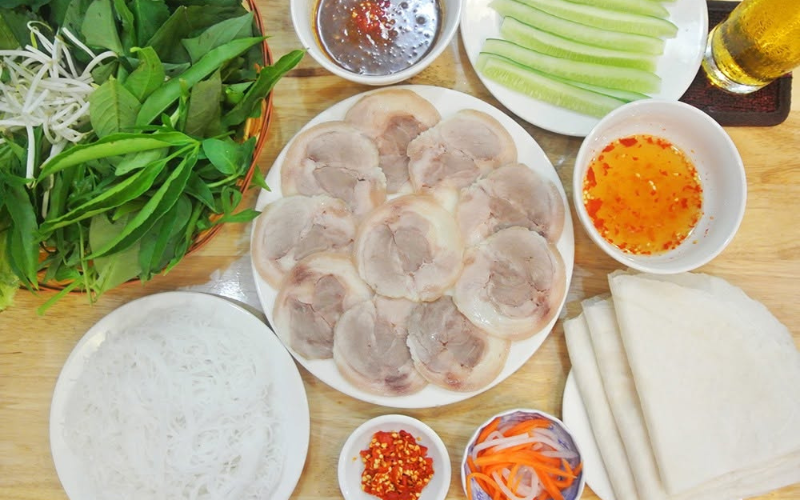
If there is one type of rice paper considered the ultimate specialty of Vietnam, many would point to the bánh tráng phơi sương of Tây Ninh. After being dried under the sun, the rice paper is left outside at night to naturally absorb moisture from the midnight dew. Thanks to this unique process, the paper becomes naturally soft and pliable without needing to be dipped in water before eating. It is highly favored for wrapping boiled pork, fresh wild herbs, and various Southern specialties.
In Reality, Vietnam Has Hundreds of Types of Rice Paper.
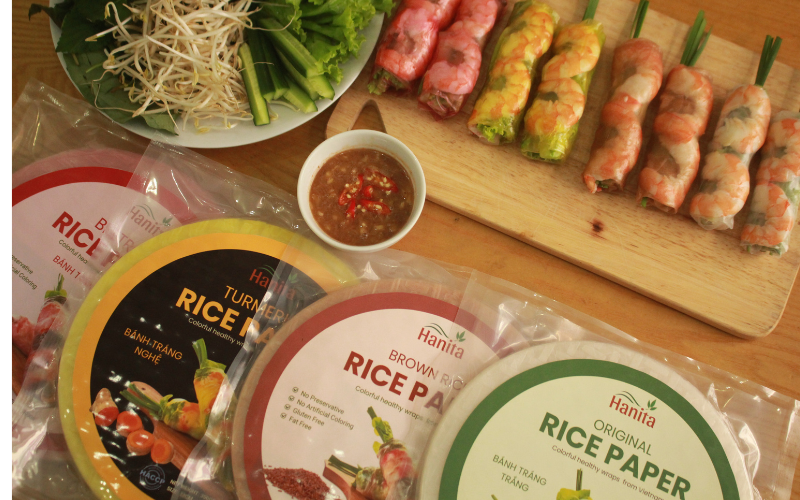
Beyond the popular varieties mentioned above, every locality boasts its own secret recipes: Pure rice paperCoconut milk rice paperSeaweed rice paperWhole grain rice paperNatural vegetable-colored rice paper. It is precisely this incredible diversity that has helped Vietnamese rice paper become a prominent food product exported to dozens of countries around the world.
Hanita – Bringing Vietnamese Rice Paper to the International Market
At Hanita, we believe that every sheet of rice paper carries a story of Vietnamese culinary heritage. From rice paper for summer rolls and spring rolls to customized product lines tailored to the unique demands of each market, Hanita always prioritizes ingredient quality, production processes, and strict export standards. We do not just manufacture rice paper; we contribute to bringing the authentic flavors of Vietnam to countries worldwide.
Conclusion
So, how many types of rice paper does Vietnam actually have?
Perhaps no one can count them all. But one thing is for certain: every single type of rice paper carries within it the culture, history, and boundless ingenuity of the Vietnamese people. From traditional craft villages to modern factories, rice paper continues its journey, serving as a culinary bridge that helps international friends better understand the rich and identity-filled gastronomy of Vietnam.




CÓ THỂ BẠN QUAN TÂM
Fresh Spring Rolls in Thailand: Colorful Twists on a Vietnamese Classic
How Many Types of Rice Paper Does Vietnam Have? The Story of a Humble Dish Carrying the Vietnamese Soul
Why Vietnamese Spring Rolls Are Becoming Malaysia’s New Food Trend?
Turmeric Rice Paper – A New Choice for Healthy Eating and Wrap Lovers
Hanita Rice Paper and Its Journey into the Japanese Market